Bühler 2160 Pellet Mill: Why the Cheapest Quote Cost $90,000 More
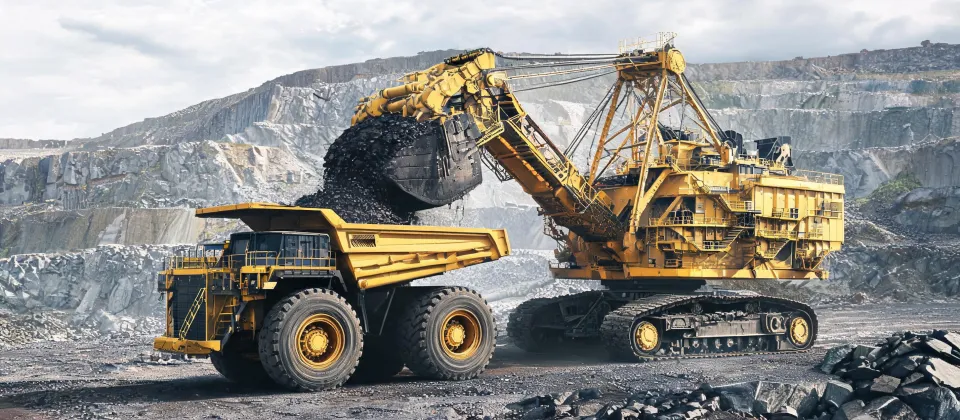
After comparing three pellet mills in Q2 2023, we bought the Bühler 2160 even though it had the highest purchase price. The lowest quote was about $90,000 more expensive to own over seven years. That sounds counterintuitive, so let me show you the cost model before you click away.
Why I Trust Cost Models Over First Quotes
I'm a procurement manager at a 110-person feed-ingredient plant. For the last eight years, I've tracked every equipment invoice, repair order, and energy bill in a total cost of ownership spreadsheet. Our annual equipment and maintenance budget is around $2.7 million. The spreadsheet is not a formality—it caught a duplicate $12,000 payment in 2021 and saved us $31,000 on a consultant contract last year. When I say the lowest quote is rarely the cheapest, I'm not repeating a slogan. I'm reading from my own audit trail.
From the outside, a lower quote looks like the sign of a more efficient vendor. The reality is that more of the real cost has often been pushed into change orders, spare parts, and production losses. This purchase is a textbook example.
What We Were Quoted
We needed a 6-ton-per-hour pellet mill for a new feed line. We sent the same RFQ to Bühler, a domestic OEM, and a used-equipment broker. The broker's 14-year-old mill looked cheap at $112,000, but the rebuild estimate was $78,000 and there was no performance guarantee. It was out. The real decision came down to Bühler versus the domestic mill.
Bühler quoted $240,000 for a 2160, including commissioning, three days of operator training, and a throughput test using our formulation. The domestic OEM quoted $195,000 for the mill alone. Installation engineering, adapter flanges, and startup support were all extra. Once we added a realistic $26,000 for those extras, Bühler's premium shrank from $45,000 to $19,000.
That's the pattern I've seen in nearly every capital purchase: people compare the first number, and the lower quote wins. The second number—the one after change orders, commissioning, and lost days—is the one that should decide.
The Operating Spread
For the operating model, we were lucky: a sister plant has run the domestic mill for three years. We normalized both lines for the same tonnage and formulation, and the differences were too big to ignore.
- Energy: The Bühler used 1.3 kWh/t less electricity. At 30,000 tons a year and $0.09/kWh, that's $3,510 a year. Over seven years, $24,570.
- Dies and rollers: Bühler's standard die lasted 2,300 hours; the domestic die averaged 1,800 hours. At 6,000 operating hours a year, that's a difference of about 0.7 dies per year—roughly $3,600 a year, or $25,200 over seven years.
- Uptime: After normalizing for utilization, the Bühler line averaged 10 fewer unscheduled downtime hours per year. At our internal cost of $850 per hour, that's $8,500 a year, or $59,500 over seven years.
Add those savings up: $24,570 plus $25,200 plus $59,500 equals $109,270. Subtract the $19,000 net upfront premium, and the Bühler 2160 came out $90,270 ahead over seven years.
What the Spreadsheet Didn't Show
Even with those numbers, I almost didn't buy it. The domestic rep said they could deliver in 10 weeks; Bühler's standard lead time was 12. I was tempted. But when I asked the domestic vendor to guarantee the delivery date with a penalty clause, they said we don't do penalty clauses. Bühler offered us a fixed calendar date at a $3,500 expediting fee—if they missed it, they paid $1,000 a day. We paid the $3,500.
That $3,500 bought certainty, not just speed. Our new feed contract had an October 1 start date. Missing it would have cost about $15,000 a day in margin and customer penalties. In an emergency, the right question is not 'how much is overtime?' but 'what is the cost of not knowing?' I've been burned twice by 'probably on time' promises before. Now I budget for a guaranteed date when the deadline matters.
When the Bühler 2160 Is Not the Right Choice
I don't want this to sound like an ad. If you're making less than 2 tons per hour, the 2160 is overbuilt and the maintenance will punish you. If you're pelleting highly abrasive materials, die life will be shorter no matter what brand you choose. If you don't have local Bühler support and an in-house mechanic who knows the machine, the service advantage disappears. And if you already run another brand and have a warehouse of spare parts, switching on paper cost alone can be a mistake.
My experience is limited to feed and biomass pelleting in North America. I can't speak to tropical wood pellet plants or unusual materials. I've also never fully understood why Bühler's die prices vary so much across regions; my best guess is metallurgy and import costs, but I'm honestly not sure. If your numbers tell a different story, trust your numbers, not mine.
A Note for the Other 'Buhler' Search
If you came here looking for Julie Buhler from Restaurant Impossible, or you're asking about Henry's age, Victoria, or how much Henry weighs, this isn't the page. I don't know Henry or Victoria, and I can't help with that. This article is about Bühler AG, the Swiss industrial group, and specifically the 2160 pellet mill. If you need a pellet mill, you're in the right place. If not, I hope you find what you're looking for.