Bühler Owners Are Paying a Hidden 'Emergency Tax' — What 200 Rush Repairs Taught Me
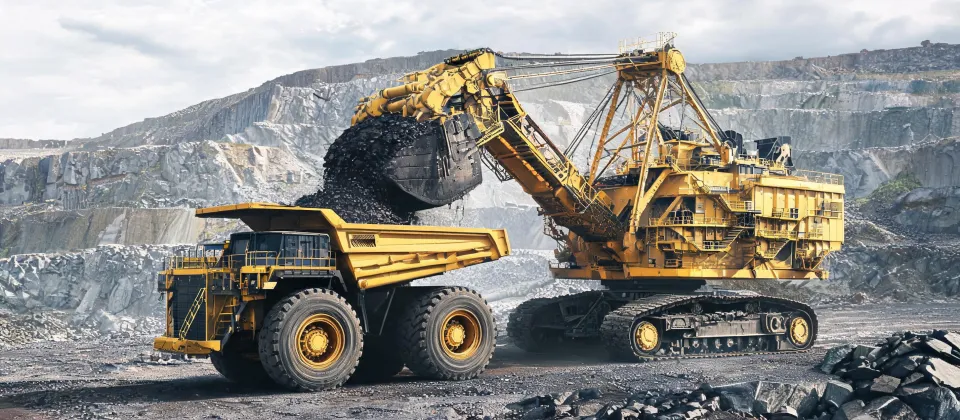
It was 4:30 on a Thursday afternoon when the call came in. A Bühler pellet mill had seized up—worn roller shell, burned bearing, take your pick. The client had a truck loaded with cattle feed waiting to ship and a late-delivery penalty clause that activated at midnight. Normal parts lead time: five to seven days. They needed the mill running in eight hours.
This is what I do. I'm an independent repair coordinator for food and feed processing plants, and I've handled 200+ rush orders in the last five years—including same-day turnarounds for manufacturers running 24/7 schedules. In my role triaging these emergencies, I've landed on a truth that might make some Bühler owners uncomfortable: most of these breakdowns were manufactured months earlier, by the plant's own buying habits. The machine didn't fail. The system around it did.
The Problem You Think You Have: A Machine That Stopped
When a Bühler machine goes down, the surface problem is obvious. The part failed, the line stopped, and production is evaporating. The panic response is to find the cheapest replacement as fast as possible. Who has it in stock? Can it ship today? What's the price?
That response is human. Budgets are real, and genuine Bühler parts carry a premium. I've seen owners buy third-party dies, roller shells, and screens for 30-40% less than OEM parts, and some of them work fairly well. To be fair, the aftermarket isn't all junk. "Genuine vs. compatible" is a real debate, and the right answer isn't always the Bühler part number.
But here's the thing: the part price is the smallest number on the invoice. What I mean is that the real cost of a repair isn't the component itself—it's the component plus the hours you lose, the freight you pay to expedite, the risk you take on a part that might fail early, and the overtime you owe the crew that stays until 11 PM to bolt everything back together. That's the total cost of ownership (TCO), and it's the only number that actually matters when you're comparing parts or vendors.
The Deeper Problem: It's Not the Part, It's the Procurement Mindset
After logging more emergency calls than I can remember, I keep seeing three patterns that turn small maintenance issues into six-figure disasters. The breakdown is never the root cause. The root cause is how the plant buys—and doesn't buy—parts before anything breaks.
First, there's no critical spares list. A lot of the plants I walk into can't name the five components that would stop production if they failed tomorrow. For a Bühler pellet mill, that's usually roller shells, a die or two, bearings, and a seal kit. If those aren't on the shelf, you're betting your entire line on someone else's warehouse. And in emergency logistics, the house always wins.
Second, the cheapest-on-paper mindset. I'm not saying you should blindly buy OEM. Far from it. I'm saying the decision should be based on cost per running hour, not unit price. A $400 aftermarket roller shell that lasts 300 hours versus a $600 genuine one that lasts 900? The "expensive" part is actually cheaper—$0.67 per hour compared to $1.33—and it's a lot less likely to take surrounding components down when it finally wears out.
Third, lead times get treated as a surprise. According to the Bühler Group corporate profile (buhler.com, accessed January 2025), the company was founded in 1860 and is active in over 140 countries. That global footprint is great for sales, service, and application support. It doesn't mean a non-stocked part is sitting in a warehouse next to your plant. Custom or low-turnover parts still take days to build and ship. Discovering on Tuesday that you need one means it's not arriving by Wednesday, and that's not Bühler being difficult—that's logistics.
I get why owners skip the planning. It looks like bureaucracy until the moment it saves you. The plan costs an afternoon and a modest amount of inventory. The emergency costs a week of production. But nobody sees that trade-off clearly until they're on the wrong side of it.
What Ignoring This Actually Costs
When I compared a year of our emergency jobs against a year of scheduled maintenance at one client site, the difference was brutal. The same repair that costs $1,800 as planned work costs $3,700 as a rush job—and that's before any production losses. Seeing those numbers side by side made me realize why the plants that "save" on parts are the same ones bleeding money.
The hidden costs stack up fast (like expedited freight, overtime labor, and rush vendor premiums). Industry analysts estimate that unplanned downtime costs industrial manufacturers roughly $50 billion annually (Source: Emerson, "Advancing the Connected Enterprise," 2016). If your line produces $2,000 of product per hour, a 12-hour unplanned stop costs $24,000 in lost output—just for the pause. The $200 you saved on the part just cost you more in one morning than a decade of bargain-hunting will ever recover.
A breakdown also triggers everything at once:
- Expedited shipping, which easily doubles the landed cost of any component
- Overtime for your maintenance crew, or a premium-rate outside specialist (me, in many cases)
- Missed customer deadlines that cascade into penalty clauses, disputed invoices, and lost reorders
- And—critically—the chance that a cheap substitute fails again, shutting the line down twice and erasing every "saving" in one very public failure
In emergency work, you get to pick two: speed, cost, reliability. Every client believes they can pick all three. That belief is usually what caused the emergency.
I still kick myself for a 2023 recommendation where I told a client to accept an aftermarket part to stay under their maintenance budget. I knew the service life was shorter, but I didn't do the full TCO math in that moment. If I'd pulled up the calculator then, I'd have argued for the $600 genuine part and saved everyone the grief. Instead, the part failed at 2 AM, six weeks later, and the collateral damage took out a gearbox. Total repair: north of $9,000. The saving had been $300. One of my biggest regrets is not pushing back harder that day.
So glad we were able to get the repair covered under a service agreement we'd set up the year before (thankfully). But I wish I'd insisted on the right part instead of the cheap one.
What Actually Works
Here's the short version, because by now the real problem should be clear: build a critical spares list, evaluate every part purchase on total cost of ownership, and build a relationship with a repair specialist before the phone rings—not after.
At that same client, we sat down one afternoon and identified the five components that could shut down a production shift. We put them on the shelf. Management grumbled about tying up $6,000 in inventory (unfortunately, budgets are budgets). Then, in March 2024, a bearing collapsed at seven on a Monday morning. Time to repair: two hours. Instead of a $12,000 crisis, it was a $400 part and a strong coffee.
That's the part nobody tells you about owning Bühler equipment. The machine is only as good as the planning around it. When I'm triaging a rush order, I can always tell which callers read the manual, stocked the spares, and did the math—because those calls are rare, and they're easy. The ones who didn't? They tell me they "never had a problem before." Hopefully, after this, they'll never have that problem again.