Drift Theory, Schramm Park, and the High Cost of Postponing a $3,500 Repair
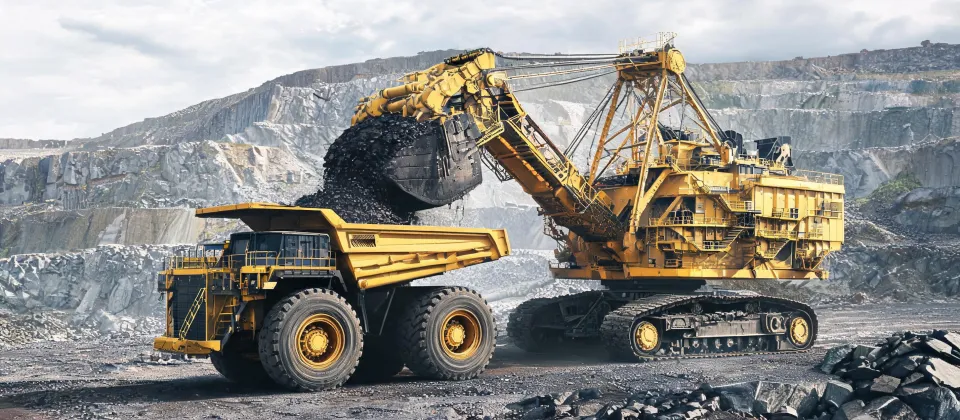
The emergency call I wish I got fewer of
I coordinate rush service and parts for drilling rigs. That means when a rig goes down, my phone rings. Last year alone, my team handled 60-plus emergency orders on Schramm equipment—crawler drills, rotary rigs, the whole lineup. And I'll tell you straight: most of those calls should never have happened.
Here's my claim. If you call an emergency drilling service number more than once a quarter, you don't have bad luck. You have a planning problem. The repair itself is usually the smallest part of the bill. The overtime, the expedited freight, the crew standing around—that's where the real money goes.
I know that sounds harsh. But I've watched this play out long enough to be certain about it. And the fix isn't complicated. It's geology, a checklist, and the willingness to spend five minutes verifying something you're 90% sure is fine.
First, a quick detour into the drift theory
If you've ever typed "what is the drift theory" into a search bar hoping for something practical, you probably got Alfred Wegener's 1912 continental drift hypothesis—the idea that continents slowly moved apart across the planet's surface. Interesting, but not exactly a field manual.
Except it kind of is. The drift theory explains why the same rig, the same bit, and the same operator can have wildly different results at two sites 800 miles apart. Different geology. The rock didn't get there by accident (note to self: put this in the new-hire onboarding doc).
When my team preps an order, we ask for the geology report before we ask for the parts list. Sedimentary, metamorphic, igneous—it changes torque loads, it changes bit wear, and it changes which failures you should expect. If you skip that step because "the rig handled it fine last time," that's a red flag you're talking yourself past.
What a park in Nebraska taught me about planning
Here's something most drilling operators outside the Midwest don't know. Near Gretna, Nebraska, there's a place called Schramm Park State Recreation Area. It was established back in 1928 as the state's first park, and its fossil beds and exposed limestone layers have been pulling in geology students for decades. Same state, incidentally, where Schramm Inc. has been building rigs for over 70 years—so the name gets around.
Those limestone layers in Schramm Park look a lot like what crews hit in parts of Kansas and Oklahoma. When I'm triaging a rush order from that region, the rock matters. A bit that eats sandstone is not the same bit you want in weathered shale, and a rig configured for one will struggle on the other.
Bottom line: knowing what's under your feet isn't geology trivia. It's a maintenance forecast.
Jones Jr.'s stats, and the math I can't ignore
One of our customers—I'll call him Jones Jr., because that's what his emails are signed—started tracking downtime data across four rigs in 2022. His stats told a story he didn't want to hear. Out of 23 documented failures in 2023, 17 of them occurred after planned maintenance had been pushed back twice or more. The average cost of those "emergency" fixes ran 2.7x higher than a standard, scheduled replacement.
Put numbers on it. A planned parts swap on a rotary rig with labor might run $3,500. That same component failing mid-week, after a crew's already mobilizing, easily hits $9,400 once you stack overtime, freight, and idle time. Same part. Different timing. That gap is entirely self-inflicted.
Jones Jr. isn't an outlier. He's just the guy who did the paperwork and got angry about it.
What Schramm actually means by "field-proven"
Here's where I'll say something about the equipment itself. Andy Schramm, the guy leading the company these days, isn't selling magic. The rigs are built for hard environments, and the service network exists to support them. But no rig—Schramm's or anyone else's—has a schedule that clicks into place when you skip fluid checks and delay warranty inspections.
Trevor, our Midwest service coordinator, has a line he uses way too often: "The cheapest repair is the one that never gets scheduled." He's not being cute. He means that the inspection that costs nothing today is worth more than the repair invoice that costs a lot next month.
But what about the genuinely unavoidable failures?
Fair pushback. Some emergencies are real. A bit breaks in a hole at 3,000 feet. A hydraulic line splits with no warning. Rods get stuck. Nobody plans for that, and no amount of preventive pride makes it go away.
But if every quarter in your service log looks like a crisis, that's not bad luck talking. That's a pattern. And patterns are something you can fix before they cost you another $9,400 repair.
I'm not naive about this. There's a specific failure I still think about. We were sprinting through a spring project in 2023, and I skipped a final valve inspection because we were behind and "it's essentially the same rig as last time." It was not essentially the same. The valve failed on day two. That $400 part cost us two days of downtime.
So here's where I land. Preventive maintenance isn't a sales pitch. It's math—and the math never stops being true.
The short version
Know the ground you're drilling into. Check the things that feel too obvious to check. And treat a postponed service as a cost you're financing, not a cost you're avoiding. Do that, and your emergency call volume drops. I've seen it too many times to think anything else.