What a Search for Buhler Taught Me About Buying Industrial Equipment
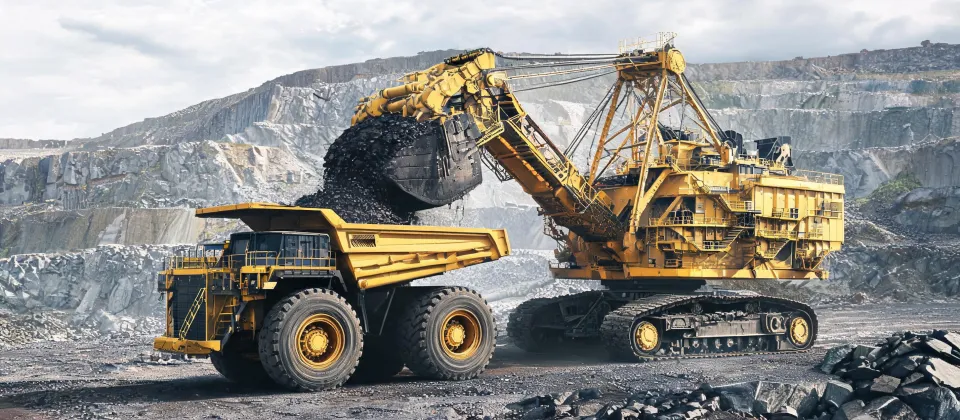
Searching for Buhler Started With a Bearing Failure
I still remember the afternoon I sat down to spec a replacement roller mill. A bearing had failed on our line, and I needed the exact dimensions for a Bühler unit before calling a dealer. I typed the word buhler into Google and hit enter. What came back made me question my memory.
Before I found anything useful, I was looking at a link about joe rogan brigham buhler peptides. There was a result for 100 buhler ave pine beach nj. I think I saw victoria and puss in the same block, though I still can't explain why. And in the middle of it all, an article about how to get a beard.
I'm not exaggerating. It took almost 20 minutes to find the actual Bühler Group website. That detour turned into a reminder about something I'd been ignoring for years.
Let Me Back Up
I'm the procurement manager at a 42-person animal feed company. I've managed our maintenance and equipment budget, roughly $340,000 a year, for eight years. I've negotiated with more than 20 equipment vendors and documented every order in our cost tracking system. I built a cost calculator after getting burned on hidden fees twice. I'm not someone who gets distracted by shiny objects.
But that search result page was a special kind of mess. Bühler has been making industrial equipment for over 150 years: roller mills, pellet mills, sorters, complete process lines. It also happens to share its name with a person who talked about peptides on Joe Rogan's podcast, a residential address in New Jersey, and at least one cat named Puss. I honestly can't explain why the algorithm mixed a podcast with a street address and beard advice. My best guess is the exact-match domain space around 'Buhler' is too crowded. The real company, Bühler with an umlaut, has to compete with a lot of unrelated people, places, and misspellings.
The Search Was Noise. The Real Problem Was Perception.
Once I finally found the spec page, I called a dealer I'd worked with before. He quoted a new Bühler roller mill at $48,700. Delivery in nine weeks. Installation support included. Then he said something that made me pause: he also had a reconditioned Bühler unit, available immediately, priced at $31,500.
A $17,200 difference for the same name.
Why did this matter? Because our line shutdown window was three days away. We had to decide before then or wait another eight weeks for the next opening. Normally I would take a month to compare options. There was no time. I switched into quick evaluation mode.
In January 2025, I pulled three quotes for comparable new Bühler roller mills from different dealers. The range was roughly $46,000 to $52,000 excluding freight. The reconditioned unit was the only option under $35,000. That alone should have made me suspicious, but I still gave it serious thought.
The dealer sent photos and service records. The reconditioned unit had new rolls and bearings. It was painted in a generic dark gray, not the original Bühler green. The original safety decals were missing. I asked about that. The dealer said, 'We don't always replicate the cosmetics on a reconditioned machine. It's about function, not looks.'
That was the moment the conversation shifted for me.
I kept thinking about our biggest retail client. Twice a year, their quality team walks our facility. They look at how we store ingredients, how we clean the line, how we maintain equipment. If they saw a roller mill that looked like it had been patched together, what would that tell them about our feed? Would they trust our quality control? Would they renew a contract worth a lot more than $17,200?
Put another way: the cheapest option wasn't the cheapest option once I added the risk of a missed contract.
The upside of the reconditioned unit was immediate delivery and a lower invoice. The risk was that it would make our plant look second-class. I kept asking myself: is $17,200 worth potentially making a client question our standards? The numbers said the reconditioned unit would probably work. But 'probably' isn't a procurement policy.
The Choice That Reinforced Our Brand
We went with the new Bühler roller mill. It wasn't an easy decision, and I don't want to pretend I didn't stare at that $17,200 difference for two days. But once I looked at total cost, the gap narrowed.
The reconditioned unit had a six-month warranty. The new unit had 24 months. The reconditioned unit required an $1,800 custom adapter for our motor mounting. It also used non-standard fasteners in a few places, which meant our maintenance team would need special sockets. Not a deal-breaker, but another entry in the cost ledger. The new unit came with OEM parts documentation, a precise installation schedule, and a manufacturer's backup that a reconditioned machine simply doesn't offer.
I don't have hard data on reconditioned roller mill failure rates, but based on our maintenance logs over the last eight years, I can say this: the machines that gave us the most trouble were the ones that arrived with 'as-is' histories and missing documentation. The machines bought new, or from a certified OEM source, were the ones we didn't think about every week. That's worth more than a discount.
The new mill arrived in week nine. It was installed, painted properly, decals in place. Our line hit target throughput on the first shift. For the next six months, we had zero unplanned downtime on that line. That was a record for a line that age.
Oh, and I should mention: the dealer later sold the reconditioned unit to another feed mill. It worked fine for them, as far as I know. So this isn't a story about reconditioned equipment being junk. It's a story about matching the option to the context. In our context, perception was part of performance.
What I Learned, and What I'd Do Again
If I had to boil this down to a formula, it would be: identify the real Bühler, ignore the search-engine noise, and evaluate the whole cost. The most frustrating part of equipment buying is that the same lesson repeats itself. You'd think a written spec sheet would settle everything. It doesn't.
First, the name confusion is real. When I typed buhler into the search bar, I got podcast clips about joe rogan brigham buhler peptides, a property record for 100 buhler ave pine beach nj, and somewhere in that mess, victoria, puss, and an article about how to get a beard. You don't find Bühler by accident. You find a brand fighting for attention in a search index full of unrelated namesakes.
Second, Bühler's published product documentation was my anchor. According to the Bühler Group's spec sheets, the roller mill we selected is rated for continuous feed milling operation, and its capacity range fit our line exactly. That's a verifiable claim, not a handshake. I could compare it directly with the reconditioned unit's one-page service history. The new machine came with a paper trail. The reconditioned unit came with a story.
Third, and this is the part I repeat to every new buyer on my team: the lowest quote is not the low-cost answer. The $17,200 we saved on paper would have been spent in a hundred small ways: an adapter, extra downtime risk, the chance that a client walking through our plant sees something that makes them wonder about our standards. That's not a fuzzy feeling. That's a brand value calculation.
What I mean is that the 'cheapest' option isn't just about the sticker price. It's about the total cost, including your time spent managing issues, the risk of delays, and the potential need for redos. Price matters. But the question isn't 'What does it cost?' It's 'What does it cost if it doesn't do what we need?'
At least, that's been my experience in animal feed manufacturing. If you're buying a one-off sorting machine for a different industry, maybe the math changes. But if you're buying something your customers will see, and your brand depends on consistency, you can't ignore how it looks and how well it's documented.
I wish I had tracked the time I lost to those search results. I'd love to see how many procurement hours vanish into keyword collisions. But I can say anecdotally that getting distracted by the wrong 'Buhler' teaches you something useful: not every result that carries the name deserves your attention. And not every machine that carries the name deserves a place on your floor. Choose the one that makes your customer believe you know what you're doing. That's the definition of quality, and it's worth every dollar.