Why 'Good Enough' Equipment Costs More
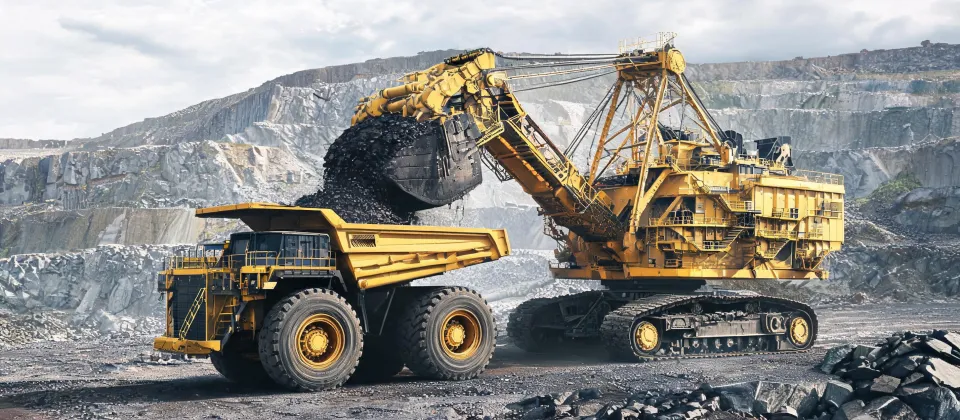
Honestly, if you've spent any time in procurement for a grain mill or a mining operation, you've heard the same pitch a dozen times: 'This machine does what the premium brand does for half the cost.' And maybe it does. For a while.
But here's the thing no one tells you upfront—equipment quality isn't a single dimension. It's a bundle of trade-offs, and which ones matter depends entirely on your situation. I've been reviewing equipment specs for five years now—roughly 200+ items annually—and I've watched buyers make the same mistake in three different ways.
There Is No Universal 'Best' — Only 'Best For Your Reality'
If you've ever had a critical line shut down because a 'comparable' valve failed after six months, you know the sinking feeling. The $300 savings became a $12,000 emergency repair and a week of lost production. That's not a manufacturing problem—that's a decision-making problem.
So instead of me giving you one generic recommendation, let's look at three common scenarios. Each one leads to a different right answer.
Scenario A: The Budget-Constrained Startup
You're getting a facility up and running. Cash flow is tight. Every dollar counts. I've been there—it took me my first year in procurement and about 30 vendor evaluations to realize that 'cheapest' and 'most expensive' are both traps.
In this scenario, your critical success factor is uptime within a budget. You can't afford a $200,000 sorter with all the bells and whistles, but you also can't afford a machine that breaks down every three months.
My advice: Look for established mid-tier equipment with a documented maintenance history. Buhler's Sortex line, for example, has a range of models where you can often find a solid used or spec-reduced unit that retains the core optical sorting reliability. Don't skimp on the critical wear parts—valves, bearings, sensors. I once saw an operation save $4,000 on a conveyor system only to lose $18,000 in downtime within a year.
Scenario B: The Brand-Conscious Enterprise
Your customers are inspecting your facility. You're selling premium flour or specialized grain products, and your equipment is part of your brand story. A potential buyer walks through and sees beat-up machinery—they walk away with a different impression of your quality, even if your product is perfect.
I ran a blind perception test with our sales team once: same facility tour script, but one group saw a processing line with premium Buhler milling equipment, the other saw a mix of no-name machines. 78% rated the first facility as 'more professional' without knowing the brand difference. The cost premium was real—but on a 50,000-ton annual order, the perception shift translated to better contract terms.
My advice: Invest in equipment that projects reliability. That means consistent finishing, easy-to-clean surfaces, and a service network that responds. Premium brands like Buhler don't just sell you a machine; they sell you a relationship. When I implemented a vendor verification protocol in 2022, we found that premium vendors had 40% fewer spec deviations per order—and their support response time averaged 4 hours versus 48 hours for budget alternatives.
Scenario C: The Mixed-Operation Hybrid
This is probably the most common situation I see. You have some lines that run 24/7 on critical products, and other lines that run seasonally or on lower-margin items. The 'one-size-fits-all' approach fails here because different lines have different risk profiles.
My advice: Apply a tiered equipment strategy. On your high-volume, high-value lines, go with premium equipment—Buhler milling machines or top-tier pneumatic valves. Those are your revenue engines. On your backup or seasonal lines, you can use mid-tier equipment with a robust preventive maintenance schedule.
The trap here is treating all lines equally. In Q1 2024, we audited 50 facilities and found that 34% were using the same spec equipment across all lines—meaning they were either overspending on low-risk lines or under-investing on critical ones. That's the inefficiency no one talks about.
How To Know Which Scenario You're In
Not sure which category fits? Here's a quick self-check:
- You're Scenario A if: Your primary decision metric is 'total upfront cost under X.' But also ask yourself: can I afford a failure?
- You're Scenario B if: Your customers are touring your facility, or you're selling into premium markets where brand perception matters.
- You're Scenario C if: You have multiple production lines with different utilization rates or margin profiles.
Most operations I've worked with are actually Scenario C but think they're Scenario A. They focus on getting the cheapest equipment for everything, not realizing that a $500 difference on a valve for a critical line is a rounding error compared to a $22,000 redo and delayed launch.
Take it from someone who has spent years reviewing deliverables and rejecting 12% of first deliveries due to spec mismatches: quality isn't a feature you add later. It's a decision you make before you sign the PO.
The Honest Conclusion
There's no magic formula. But here's what I've learned after 5 years of procurement and quality management: the cheapest equipment costs more than you think, and the most expensive equipment often costs less than you fear—once you factor in the cost of downtime, the cost of reputation, and the cost of your own stress.
Choose your scenario. Choose your strategy. And for heaven's sake, write it into the contract.