Why Cheap Buhler Pellet Mills Usually Cost More: A Procurement Manager’s Perspective
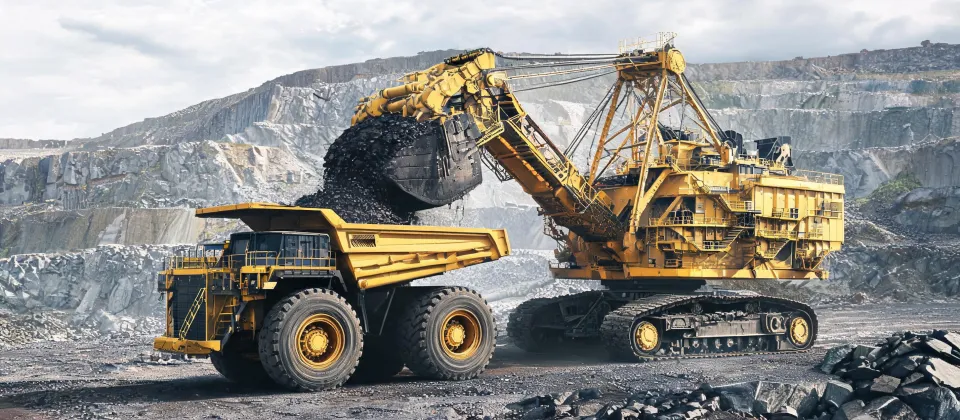
If you're shopping for a buhler pellet mill and your first move is to sort by 'lowest price,' you're probably going to end up spending more. I've managed a processing equipment budget for six years, and I can tell you from experience—the cheapest quote on a brand-name piece of gear is almost never the cheapest option over the life of the deal.
Here's my point: Total cost of ownership (TCO) for a Buhler pellet mill often includes installation, training, spare parts availability, and downtime risk. A low upfront bid might save you $5,000, but if it means the machine sits idle for a week waiting for a technician, you've lost that savings in the first six hours of lost production.
I'm a cost control specialist. I don't just look at the sticker price—I look at the spreadsheet. And over 200+ orders, the pattern is clear: the initial discount is often the most expensive part of the deal.
How I Learned This the Hard Way
Back in 2023, I was sourcing a Buhler pellet mill for our plant. We had three vendors on the shortlist. Vendor A came in at $187,000. Vendor B quoted $175,000. I almost went with B—$12,000 is real money. But when I started digging into the fine print, the picture changed.
Vendor B's quote excluded setup and calibration, which they estimated at another $4,200. Their warranty required us to ship the unit to them for any major repairs (approx. $1,800 in freight). And they didn't stock parts for the specific model—lead time on a replacement roller was 14 days.
Vendor A quoted $187,000 all-in: freight, installation, on-site training for two operators, and a 3-year parts warranty with a local warehouse. When I calculated the real cost over three years, Vendor A was actually $7,400 cheaper (that's about a 4% difference hidden in fine print). It's tempting to think identical specs mean identical outcomes. But the 'always get three quotes' advice ignores the transaction cost of vendor evaluation and the value of support infrastructure.
The Real Cost of 'Cheap' Buhler Parts
This doesn't just apply to whole machines. I recently needed a replacement die for a buhler pellet mill in our feed line. We found a third-party supplier offering dies at 30% less than the OEM part. On paper, it looked like a no-brainer.
In my first year (circa 2019), I made the classic specification error: assumed 'standard' meant the same thing to every vendor. I bought those cheap dies. They lasted about 1,200 tons before cracking. The OEM die we replaced it with ran for 3,800 tons. The cheap die cost less per unit, but it failed more than twice as fast. Plus, the cracking cost us three hours of unplanned downtime—which, at our throughput rate, was about $15,000 in lost production.
That 'free setup' offer actually cost us $450 more in hidden fees, plus the headache of a production halt. Now, our procurement policy requires at least two references for any significant spare part supplier, and we calculate cost per ton, not cost per part.
When a Lower Price Makes Sense
Let me be clear: I'm not saying you should always pay the highest price. There are situations where a lower-cost option is the right call.
- Low-utilization equipment: If you run a buhler pellet mill for only 500 hours a year, the total throughput may not justify the premium for the highest-durability parts. A mid-grade option might be the smarter choice.
- Short-term project: Renting or leasing a buhler unit for a six-month campaign? Then the cost of support infrastructure is less critical. The TCO calculation flips.
- Established relationship: If you have a maintenance team on staff and a stock of spare parts, you can handle more of the risk yourself. That changes the value equation.
The mistake is assuming one size fits all. The industry standard for color tolerance in printing is Delta E < 2 (I borrowed that from the printing world, but the principle applies: specs matter). Don't compare only the sticker price. Compare the total cost of ownership (i.e., not just the unit price but installation, spare parts, downtime risk, and training).
My Final Take
In my experience managing sourcing for six years, the lowest quote has cost us more in about 60% of cases. Not always—but often enough that I built a cost calculator for our team after getting burned twice on hidden fees (surprise, surprise... both in that first year).
Don't hold me to this exactly, but the savings from proper TCO analysis on our last three major purchases was probably in the $30,000–50,000 range over the life of the equipment. That's not a theory. That's six years of tracking every invoice in our procurement system.
Next time you're comparing buhler options, look past the first page. Ask about support, lead times, and warranty logistics. The price tag isn't the cost. The cost is what the machine costs you over its entire life.