Bühler Equipment Buying: Avoid the Mistakes I Made
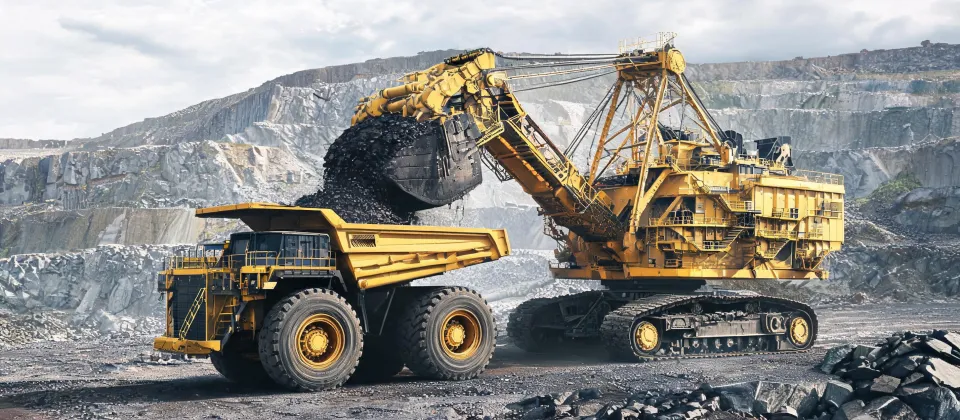
There is no one-line answer to “should I buy Bühler?” I get asked that a lot, and I used to answer with something confident like “yes, if you can afford it.” After eight years of sourcing and installing this equipment, I know better.
I’ve handled procurement for grain processing, feed, and optical sorting. I’ve personally made and documented 11 significant mistakes—maybe 12, there’s one I keep forgetting—totaling roughly $74,000 in wasted budget. I now maintain our team’s pre-buy checklist, so I get to see other people’s mistakes too. The pattern is almost always the same: too much attention on the machine price, not enough on the situation around the machine. Oh, and before the comments start: I’m talking about engineered food, feed, and grain systems. I haven’t run a Bühler die-casting line, so ignore me if you’re in metal.
So let’s do this properly. Rather than pretend there’s a universal answer, I’ll break it into three scenarios and give specific advice for each.
First, figure out what kind of purchase you’re making
The right move depends mostly on three factors: how the new equipment fits the rest of the line, how much throughput you actually need, and how much support you can rely on locally.
- Scenario A: You’re building a new line or plant.
- Scenario B: You’re replacing one machine in an existing line.
- Scenario C: You’re a small or highly specialized operation.
If you fall between two scenarios, go back to the bottleneck. More on that in a minute.
Scenario A: Building a new line or plant
This is where Bühler makes the most sense to me. The value isn’t just the pellet mill or roller mill; it’s the integration between steps. The dryer talks to the sorter, the sorter talks to the scale, and the controls are designed as one system. According to Bühler Group’s official website (buhlergroup.com), the engineering and process support are part of what they sell, not just the hardware.
I learned this the hard way in 2017. We were building a new feed mill line, and I chose a lower-priced roller mill because the spec sheet looked close to the Bühler option. The machine itself ran fine. The integration did not. We spent $18,000 and six weeks with a control contractor who had to make the machine talk to the rest of the line. The other quote was only $40,000 cheaper up front. So the “savings” was well under half of the actual extra cost.
When I compared the two quotes line by line—not just the bottom of the first page—I saw why the Bühler number was higher. It included commissioning, a performance test, and operator training. The alternative didn’t. If you buy capital equipment like I did in 2017, you’re not buying a machine. You’re buying a project that shows up in a crate.
What I’d do now: Ask every supplier to quote the same full scope: equipment, freight, installation, controls, commissioning, training, and a tested performance target. Then compare the totals. If someone tells you the quote is “approximate” for parts of that scope, treat it as a red flag.
Scenario B: Replacing one machine in an existing line
This is where the biggest money leaks show up.
In 2023, a Bühler rep showed me a new optical sorter. The demo was impressive. They measured a 2% yield improvement on product that looked a lot like ours. The machine cost $180,000. I approved it. The actual improvement after commissioning was about 0.4%—maybe 0.5% if you count the first week, but I don’t count commissioning.
Why the gap? The bottleneck wasn’t the sorter. The dryer upstream couldn’t handle the higher flow, so the sorter spent half its time waiting. It was like putting a Formula 1 engine in a car with a tired gearbox. The new part was great; the system wasn’t.
My rule now: if you’re replacing a single unit, verify the bottleneck before you compare prices.
- Stand by the machine for a few hours and log downtime.
- Watch where the product piles up.
- Calculate what a 2% yield gain is worth per year in dollars.
- Do the same payback math for the machine that’s actually limiting the line.
This is the part where I’ll say something unpopular: a new Bühler machine can be the wrong purchase in this scenario. Not because Bühler is bad, but because the problem lives somewhere else. A $40,000 rebuild of the existing equipment might get you more payoff than a $180,000 upgrade.
Then there’s the spare parts question. For critical wear components, I now spec original Bühler parts. I once saved 30% on a non-original wear part for a pellet mill, and it lasted exactly 6 weeks instead of 9 months. The downtime cost us more than the savings. But for non-critical structural components, third-party parts are fine. The trick is knowing which is which before you order, not after.
Scenario C: Small or highly specialized operation
This scenario is the one that makes people angry. So let me be clear: I like Bühler equipment. I’ve seen it perform in real plants. But for a small producer, the brand can be a trap.
A friend of mine in snack foods bought a Bühler sorter in 2021. The financing made the monthly payment easy. The machine itself was excellent. It also sat idle most of the time because the nearest service technician was seven hours away, and the plant team didn’t have the training to change settings without remote support. The machine was right; the fit was wrong.
If you’re running a 2-ton-per-hour line with a lot of product changes, Bühler’s sophistication can work against you. The controls, the maintenance requirements, and the spare parts lead times are designed for continuous operation. That doesn’t mean you should never buy one. It means you need to check the total support distance, not just the brochure. For a line that size, a simpler machine with a local service contract can produce the same output with less drama.
There are exceptions. Some pasta, oilseed, and certain feed applications need the process know-how Bühler has built over decades. In those cases, even a small producer should probably pay the premium. Also, a used or refurbished Bühler machine can be a no-brainer if it’s supported by a local dealer with spare parts in stock.
But if you’re buying the logo because it impresses customers, skip it. Your customers care about output, not nameplates. Your banker cares about utilization rate, not brand preference.
How to tell which scenario you’re in
If you’re not sure, answer these five questions. Write them down; don’t keep them in your head.
- Is this for a new line, a replacement, or a small/specialty expansion?
- If it’s a replacement, have you measured the bottleneck? If not, stop here.
- If the machine goes down, how fast can someone physically get to your site?
- What is the total cost of ownership over 10 years: energy, wear parts, downtime, training, and resale value?
- What is the cost of doing nothing for 12 months?
That last question is the one most quotes won’t include. In my experience, the real value of a capital purchase is the difference between the current state and the future state, not the difference between two quotes.
This sounds simple, but it’s where almost everyone rushes. I’ve sat through meetings where the only topics were the quote and the machine’s color. We spent more time on the color than on the annual maintenance cost. Don’t do that. The first year is not the test; the fifth year is.
A few closing thoughts
Bühler makes excellent equipment. I’ve made it clear that I buy it for certain applications, and I’ll keep doing so. But the price tag is only the beginning of the story. The lowest quote is often the most expensive machine you’ll ever own.
The goal isn’t to buy Bühler. The goal is to make money with the machine after it’s installed. Those are not the same thing.
One more honest note: this was accurate as of Q4 2024. Bühler’s product line and service options change fast, so verify current specs, prices, and support coverage before you budget. I’d rather be boring and current than confident and wrong.
Bottom line: buy when the full scope makes sense, skip when it doesn’t, and always calculate the total cost before you let a beautiful demo turn your head.