Buhler vs. the Rest: A Quality Inspector's Guide to Choosing Industrial Processing Equipment
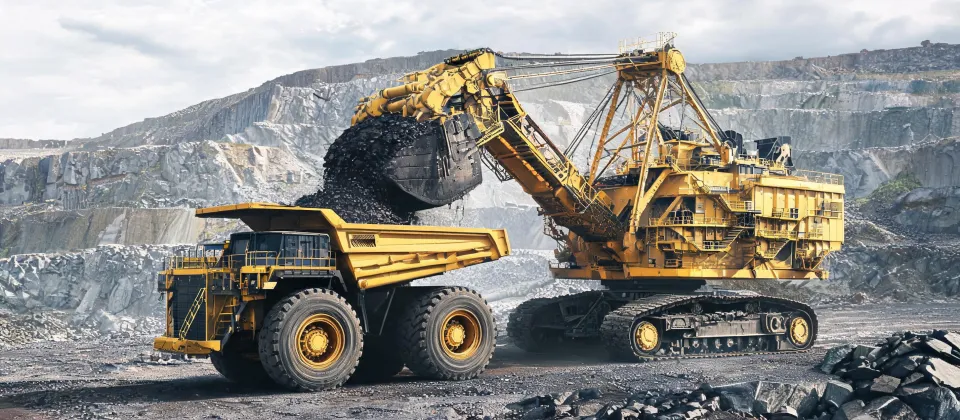
Bottom line up front: There is no single 'best' equipment supplier. There is only the supplier that fits your process, your team, and your current risk profile. I say this after four years of reviewing machine specs and acceptance test reports for food and feed processing projects.
I have mixed feelings about supplier comparison articles. On one hand, they help you ask better questions. On the other, they usually pretend one name is the universal answer. That is not how decisions work when you are looking at a 50,000-unit-per-year line.
If you have ever sent a 14-page specification and received a 4-page quote that ignored your tolerance requirements, you already know the feeling. Trust me on this one: the brand on the brochure matters less than the contractual language on the acceptance test.
And if you arrived here by searching buhler organon model, let me clear that up first. That term usually points to Karl Bühler's theory of language. An organon is a tool, and his model describes how language works as a tool. It has nothing to do with the Swiss machine builder. But the idea is still relevant: any equipment vendor is 'speaking' to you through drawings, datasheets, and guarantees. The real question is whether what they say matches what they deliver.
So instead of asking 'Buhler vs. everyone else,' I ask: What problem am I solving? The answer usually falls into three scenarios: a new line, a single-machine replacement, or a capex-constrained project with strong in-house engineering. Each has a different answer.
Why 'which one is best' is the wrong question
From the outside, a premium processor and a budget processor look like the same steel, rollers, and control panels. The reality is tolerance, test protocol, and after-sales behavior. In 2023, I passed on an expensive machine that was structurally fine but badly documented, and bought a mid-priced machine with excellent calibration data. The brand told me less than the paperwork did.
Think of the old hawk vs eagle vs falcon debate. A hawk is built for fast strikes, an eagle covers large territory, a falcon is all speed. They are different tools for different hunting grounds. Equipment decisions are the same.
Three scenarios, three different answers
Scenario A: you are building a new line or a major expansion
If you need integration across milling, sorting, or feed processing, a global equipment partner with process engineering depth is usually worth the premium. Buhler has built complete plants for decades. They know the interfaces between a roller mill, a sifter, and a pellet mill better than a small local fabricator does.
We buy process results, not iron.
I heard that from a plant manager named Alexander at the First Congress on Process Integration I attended in 2018. He was right. A new plant is a system problem. If one vendor can take responsibility for the whole system, your risk drops. But make the responsibility contractual. Which conveyor supplier are they managing? Who is the final authority on the control sequence? If the answer is 'we will handle it,' get it in writing.
Scenario B: you are replacing one machine in a running line
This is different. If your existing line already works and you just need a new sorter or mill, the priority is mechanical fit and compatibility, not global integration. A machine that is excellent in theory can create a nightmare if the motor cabinet does not fit the existing footprint.
Never expected this, but the surprise was not performance in a 2023 replacement project. It was access. We specified a replacement Buhler sorter, and the service panel ended up 15 centimeters from a wall because nobody checked the original foundation drawing. That quality issue cost us a $42,000 re-installation and delayed launch by six weeks.
Vendors will not tell you that 'standard turnaround' often includes buffer time for their production queue. It is not necessarily how long your order takes. Ask for the test schedule, not just the delivery date.
Scenario C: your priority is capital cost and your team can handle engineering
Here is where I might lose some people: Buhler is not always the right answer. If you are on a tight budget and you have strong in-house mechanical and electrical engineers, a regional specialist can deliver close to the same performance for significantly less money. I would rather work with a specialist who knows their limits than a generalist who overpromises.
What most people do not realize is that 'one-stop shop' often comes with a convenience premium. That premium can be worth it. But if you do not need the convenience, it is just extra cost. Per FTC guidelines (ftc.gov), advertising claims have to be truthful and substantiated. So when a vendor says 'we can do everything,' ask them to substantiate that with test data and reference sites for your specific material.
How to know which scenario you are in
You do not need a consultant to figure this out. Ask three questions:
- Is my project about process integration or equipment replacement? If integration, you are in Scenario A. If replacement, Scenario B.
- What hurts more: downtime or capital cost? Downtime tends to push you toward a premium supplier with fast service. Capital cost tends to push you toward a local specialist.
- Can my team maintain this equipment without vendor hand-holding? If yes, Scenario C becomes more realistic. If no, include vendor support in the comparison.
If you check buhler group glassdoor reviews, do not read them only for salary data. Look for comments about technical training and spare parts support. Those comments tell you more about total cost of ownership than any tour of an assembly hall.
I don't have hard data on global average equipment price differentials. But based on 2024 quotes for three comparable flour mill projects, Buhler proposals ran roughly 15 to 25 percent above unbranded alternatives. That gap got smaller when I added training, remote diagnostics, and lifecycle service into the comparison. I should add that I was comparing apples to apples: same capacity, same automation level.
And if you have been reading the 'hawk vs eagle vs' argument in bird forums, the same principle applies: choose the strategy, not the label. Hawks strike fast on short-term wins. Eagles scan the whole territory. For a one-machine fix, be a hawk. For a new plant, be an eagle.
What I check before I approve any equipment recommendation
- Specification tolerances: are they unilateral or mutual? If the vendor can change tolerances without approval, the price is meaningless.
- Acceptance test criteria: do you have signed-off reference material from your own site? A machine that works on the vendor's test material is not automatically a fit for yours.
- Documentation package: is the as-built drawing based on the actual delivered machine? I rejected 9 percent of first deliveries in Q1 2024 because calibration records were missing. The machines were not necessarily bad; the vendor could not prove they were good.
- Service response: what happens after the commissioning team leaves? Check who actually answers the phone, not who is on the sales slide.
The bottom line: a vendor who says 'this is not our strength, here is who does it better' earned my trust for everything else. If you are evaluating Buhler, make sure the contract states which process specs they own and which they are asking you to accept. That boundary is not a weakness. It is how professional suppliers behave.
The honest close
Buhler makes world-class processing equipment. But 'world-class' only matters if it solves your specific problem. If you need process integration, buy integration. If you need a single machine, do not pay for more system than you can use. If your team can manage the risk, consider a specialist that costs less.
Take it from someone who rejected 9 percent of first deliveries in Q1 2024 and stopped counting the number of times a verbal promise was not in the contract: your scenario is the one thing the vendor will not define for you. Define it yourself, then compare equipment. Oh, and the next time someone quotes you a one-size-fits-all solution, ask them to show the data. If they cannot, that is a red flag.