Why I Chose the Bühler Pellet Mill After a Cheaper Quote Almost Won
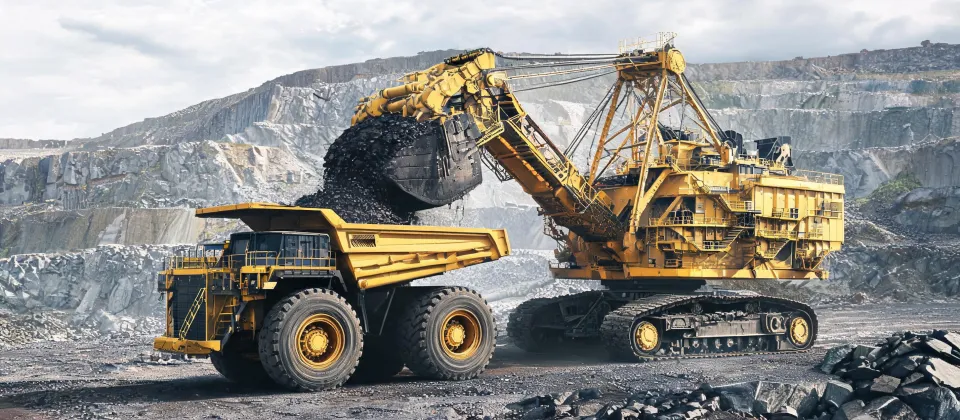
The Morning the Mill Died
I still remember the morning the old pellet mill gave up. There was no dramatic grinding halt, no smoke pouring out of the housing. Just a click, a hum, and then silence. Jack, our plant manager, called me at 7:15 AM.
"It's dead. We're down."
One sentence. That's all it took to turn a normal Tuesday into a three-week procurement marathon.
I should back up and explain who I am. I'm the office administrator for a mid-size animal feed company—about 150 employees across two facilities. I manage all equipment and supply ordering, roughly $400,000 in annual spend across about 15 vendors. Maybe $380,000, I'd have to check the system. I report to both operations and finance, which means I'm constantly pulled in two directions. Operations wants speed. Finance wants savings. The Bühler replacement project taught me there's a third direction that matters more: total cost of ownership.
How I Learned to Stop Trusting Sticker Prices
When I took over purchasing in 2020, I inherited a vendor list that hadn't been seriously reviewed in years. I made plenty of mistakes. The one that stuck happened in my first year: I found a great price on filtration bags from a new vendor—$1,200 cheaper than our regular supplier. Ordered 200 units. They couldn't provide a proper invoice, only a handwritten receipt. Finance rejected the expense report. I ate roughly $900 out of my department budget. Now I verify invoicing capability before placing any order.
That experience taught me a small version of the lesson. The pellet mill made it impossible to ignore.
The Project
Our old pellet mill—a Bühler, ironically, the same brand we'd run for over a decade—had been limping along for two years. The maintenance team kept it alive with band-aid fixes. But after that morning's breakdown, the repair estimate came back at $18,000. The regional technician said something I'll never forget: "You're not paying me to fix this problem. You're paying me to tell you it's time to replace it."
Jack gave me the specs: 3 tons per hour throughput, specific die configurations, dust collection ports. Delivery window: 10 weeks, so we could rebuild inventory before the busy season. Steven from finance set the budget at $180,000, all-in. Then, in his usual dry voice, he added: "I want the all-in number in the first email, not the last one."
Three Quotes, Three Pictures
I went back and forth between three vendors for about two weeks:
- Bühler — the established player. Same brand we'd run for over a decade. $185,000 all-in: equipment, shipping, installation, one-week operator training.
- A European alternative — solid reputation, slightly cheaper. But their nearest service technician covered a three-state territory, and I had trouble getting a straight answer on parts delivery.
- A domestic manufacturer — the "value" option. Nearly 30% cheaper on the sticker. Henry, their regional rep, emailed back within the hour every single time. He promised delivery in six weeks.
The sticker price was $128,000. That's what caught my eye. But the line item didn't include shipping. Or installation. Or training. Or the extended-service contract. Here's the breakdown I put together:
- Equipment: $128,000
- Shipping and rigging: $9,800
- Installation: $18,000 — two technicians traveling across the country, plus four days of hotel, meals, per diem
- Operator training: $4,200 — one trainer, one week, meals not included
- Extended maintenance, years 2–3: $15,000 — standard warranty covered only 12 months
- Spare parts kit: $5,300 — recommended because parts lead time averaged 10 to 14 days
Total: roughly $180,300. The sticker did what stickers do. It didn't lie. But it omitted.
The Question That Changed the Math
Even after calculating all that, I still almost went with the domestic manufacturer. Why? Because Henry was responsive. I had his personal cell. He made me feel like my project was the only thing on his calendar. The Bühler team took two days to respond to the initial RFQ.
Then Steven asked the question: "What's an hour of downtime worth?"
I went back to the production data. When the old mill died, we were offline for three days. Those days cost us roughly $1,800 per hour in lost output. That's about $43,000 for a single full outage.
Now here's the part I almost missed. The domestic manufacturer's nearest service tech was 900 miles away. Their references said 3 to 4 days for non-emergency calls, with emergency service "prioritized"—but not guaranteed. The European option had one tech covering multiple states. Bühler offered a contractual 24-hour response window with a penalty clause if they missed it.
Why does that matter? Because a service promise without a penalty is just a nice paragraph in a sales deck. And one extended failure on the domestic mill—just one—would wipe out every dollar of procurement savings.
I called the domestic manufacturer's three references. Two mentioned parts lead times measured in weeks. One customer said something that stayed with me: "The machine is fine when it runs. The problem is when it doesn't." That sentence sealed the Bühler case.
The Decision
I still went back and forth for another week. This wasn't an easy call. Part of me wanted to prove I could save the company money. Part of me was scared of being the admin who bought the fancy brand when a cheaper option existed.
Jack settled it: "I've run both machines. The Bühler tells you what's wrong. The other one just stops and waits for you to figure it out."
We signed with Bühler on a Thursday afternoon. Delivery arrived in nine weeks, two weeks past the original promise but still in time for our ramp-up. Installation took five days. The one-week training meant the mill was running at 90% efficiency by the end of month two. Jack said the previous Bühler took four months to hit that number. Not bad.
Results, Twelve Months In
Our actual total cost after twelve months: $197,300. That includes a spare die set we added during installation, two extra training sessions for new operators, and a preventative maintenance visit at month eleven. Unplanned downtime: zero.
I want to say we saved $43,000 in avoided downtime. That's not quite right. We didn't save money—we just didn't lose it. There's a difference, and that difference is the entire point of the total cost of ownership exercise.
If we'd gone with the domestic option, the sticker would have been lower. Maybe $180,000 all-in with their extended maintenance. But the risk profile was completely different. And with production equipment, risk isn't a personality trait. It's a dollar amount.
What I'd Tell Other Buyers
This gets into production engineering territory, which isn't my area of expertise. For a technical evaluation, you should consult a real process engineer. What I can share from a procurement perspective is a framework that took me four years to get right:
- Calculate your cost per downtime hour before you talk to any vendor. That single number—for us, roughly $1,800—changes how every quote reads.
- Force every vendor to quote the same items. Shipping, rigging, installation, training, extended warranty, spare parts. If a vendor resists pricing one of those items, that's information.
- Get service response times in the contract. Per FTC guidelines (ftc.gov), claims need to be substantiated. A sales pitch is a claim. Ask for the evidence and the written commitment.
- Remember the small costs too. USPS raised First-Class Mail letter stamps to $0.73 in January 2025 (usps.com/stamps), and that small change shifted our annual mailing budget by a few hundred dollars. If a stamp price can move a budget, freight terms and customs fees can absolutely move an equipment quote. This pricing was accurate as of Q1 2025; always verify current rates before finalizing decisions.
- Count your own time. I spent about 30 hours on this evaluation. Our legal team spent four hours reviewing contracts. At fully loaded rates, that's roughly $2,500 of internal cost. Time is part of the deal, whether your accounting system tracks it or not.
The question isn't which vendor is cheaper. It's which vendor is least likely to cost you money after the invoice is paid. Bühler made their number look higher upfront. From where I sit, their all-in cost came in lower than every alternative we evaluated.
I want to say the service guarantee was the deciding factor. Honestly, it was the whole package: contractual response times, local parts warehouse, a machine that tells you when something's wrong before it breaks. None of that shows up on a spec sheet. All of it shows up on a P&L.
The cheapest quote is only the cheapest if nothing goes wrong. And in fifteen years of purchasing, I've learned that something always goes wrong.