Why Your Bühler Parts Order Is Always an Emergency — and What It's Really Costing You
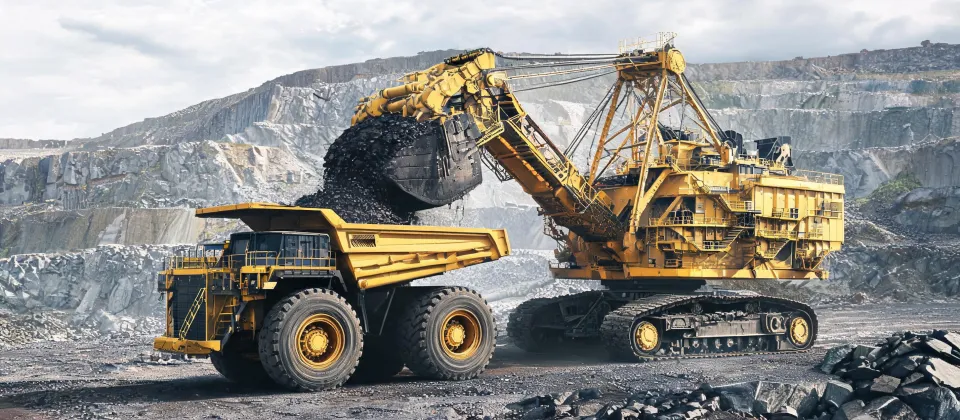
In March 2024, at 10:14 on a Thursday morning, a plant manager called me. His Bühler pellet mill had thrown a main-shaft bearing at 7:40 AM. The line was down. Sixteen operators were standing around. Two trucks were waiting to load. Normal lead time for that genuine Bühler bearing: five days. He needed the line running by Saturday.
This is the call I take. In my role coordinating aftermarket parts for industrial processing equipment, I've handled 300+ rush orders in eight years — including same-day turnarounds for feed mills, oilseed processors, and grain elevators. The panic sounds the same whether it's a pellet mill bearing, a roller mill part, or a Bühler Farm King 84 finish mower part in a dealer's shop during harvest. Speed, quality, price. In an emergency, you don't get to pick — the machine picks for you.
Your instinct is to blame the machine: it broke out of nowhere. Except it didn't. That bearing had been vibrating for weeks. An infrared scan would've caught it. A $300 spare on a shelf would've fixed it in an hour.
The machines don't fail first. The decisions fail first.
After 300 of these calls, I can tell you that most of those decisions looked completely reasonable at the time.
The Real Emergency Isn't the Part
Cause #1: The “Fix It When It Screams” Maintenance Culture
Preventive maintenance is boring. It doesn't show up on a spreadsheet as a win — it's just a line item getting cut, until it becomes a catastrophe. I've watched plants defer an $8,000 inspection package to save money, then spend $60,000 on lost production, emergency freight, and rushed repairs three months later. (Note to self: still bitter about one of those.)
The bearing failure I mentioned? It was 15 months past its recommended replacement interval. We flagged it during a service visit. The maintenance manager signed the work order. Then the budget got cut, and the work order went in a drawer.
Cause #2: The Lowest-Quote Reflex
I have mixed feelings about how procurement works in this industry. On one hand, every purchasing manager has a target and a boss. On the other hand, the obsession with unit price is how you end up paying the most.
Here's a version of that story we see quarterly. A plant needs a critical component for their Bühler equipment. The genuine part: $460. A “will-fit” part from a discount supplier: $250. Procurement saves $210. Feels like a win. Then the part fails 400 hours into a 4,000-hour expected life — and when a main-shaft bearing fails at 12 tonnes per hour, it doesn't fail quietly. It takes the shaft with it. It takes the seals with it. It takes your production schedule with it. That $210 savings turned into a $14,000 repair and a 30-hour outage. (Unfortunately, the freight bill on the emergency replacement alone ate the original savings.)
And here's the uncomfortable part about how parts shopping actually happens. Search “Bühler parts” and you'll get results for Swiss industrial processing equipment (pellet mills, roller mills, sorters), a different Bühler's agricultural line — Farm King 84 finish mower parts — and pages for a person named Donald Lawrence Buhler. When your line is down, you don't have time to decode which Bühler you're dealing with. The confusion pushes buyers toward the fastest link, which is rarely the right one.
What I mean is this: cheap isn't just about the sticker price. It's about your time spent managing a failure, the risk of a second outage, the production you didn't ship, and the phone call to your own customer explaining why they're waiting. In my experience, the lowest quote has cost more in the long run in 60% of the rush cases I've tracked.
Cause #3: The Counter-Intuitive One — Emergencies Make You Bad at Deciding
Here's what took me the longest to learn. The biggest cost of a rush order isn't the freight or the premium pricing. It's the decisions you're forced to make under pressure. When a line is down, you don't compare options — you eliminate them. You make a call in two hours that would've taken two days if the machine were running.
I still kick myself for a morning in 2023. A client asked whether to wait 36 hours for the correct motor starter from us, or take a rebuilt unit they could source locally in six. I laid out the trade-offs and let them decide in a hurry. They took the rebuilt unit. It lasted 90 days. The second failure triggered a $50,000 penalty clause with their own customer. Had I pushed the 36-hour wait — which is nothing in the life of a plant — they'd have kept that contract. Since then, our policy for critical electrical and rotating components is no substitutions, no matter the wait. It has cost us a few impatient clients and saved every one of them from a second failure.
The uncomfortable truth is that the 10:14 AM call wasn't a bad manager on the other end. It was a good manager making small, reasonable decisions for months: defer a little maintenance, take the slightly cheaper part, skip the engineering review because the machine sounded fine. None of those decisions looked like a crisis. Together, they built one.
What a 30-Hour Outage Actually Costs
Let's put numbers on it, because “downtime is expensive” doesn't land until you can measure it. Take a typical feed mill running a Bühler pellet mill at 12 tonnes per hour:
Lost production: 12 t/h × $35 margin per tonne = $420 per hour. A 30-hour outage wipes out $12,600 in margin before anything else.
Then the scramble begins:
- Rush freight: $400–$800 for next-day delivery, against $65 for ground.
- Expedited manufacturing: 30–50% above list price when a part has to be made in a hurry.
- Recurrence risk: if the “will-fit” part was the one that failed, you buy the genuine part anyway — and pay the freight twice, and lose a second weekend at the plant.
Now take that $210 procurement saving. In this scenario, it's roughly 4 cents per operating hour of the bearing's expected life. And what it bets against is a $12,600 outage plus a damaged customer relationship. That's a bad bet from every angle.
Total cost of ownership (in other words, not just the part's price, but its price per operating hour, including the probability of premature failure) is the framework that gets you out of this.
A $460 genuine bearing that runs 4,000 hours costs 11.5 cents per hour. A $250 alternative that runs 800 hours costs 31 cents per hour — before you add the cost of the line stopping. Cheap wasn't cheap. It was expensive in slow motion.
The Fix Is Boring, and That's Fine
You'd think someone with 300 rush orders under their belt would write about heroic saves. But every single rush order I've ever expedited was preventable. The ones that scared us straight all ended the same way — a client filling out a critical spares list after the crisis, promising themselves they'd never do this again.
So do the boring thing, before the bearing screams:
- Walk your plant with your OEM service rep and do a critical-spares analysis. Find the components that stop production when they fail, write them down, and put them in a cabinet.
- Buy spares during planned maintenance or commissioning, when lead times are normal and pricing is straightforward. An emergency part doesn't cost more because the manufacturer is greedy. It costs more because someone's production is waiting on it.
- Buy on total cost of ownership, not unit price — for parts, for vendors, for your maintenance strategy. The lowest quote has a price; it just isn't the one on the invoice.
- Build the OEM relationship before you need it. An existing account with documented equipment history lets us cut hours — sometimes days — off a rushed delivery. First-time callers in a panic spend their first hour proving who they are and what machine they own.
One more thought. The 2026 Winter Olympics skiing schedule in Milan-Cortina has been public for years. Ski racers don't wake up in February 2026 and ask when their event starts — they've planned around it for a decade. Industrial maintenance is the only field I know where a production date arrives like weather, and everyone acts surprised.
You can't outrun a bad decision, and you can't air-freight your way out of a maintenance culture that waits for failure. Our logistics team can move a genuine Bühler part at peregrine-falcon speed when it has to. But the rush orders I'm most proud of are the ones we never got — because the part was already on the shelf.